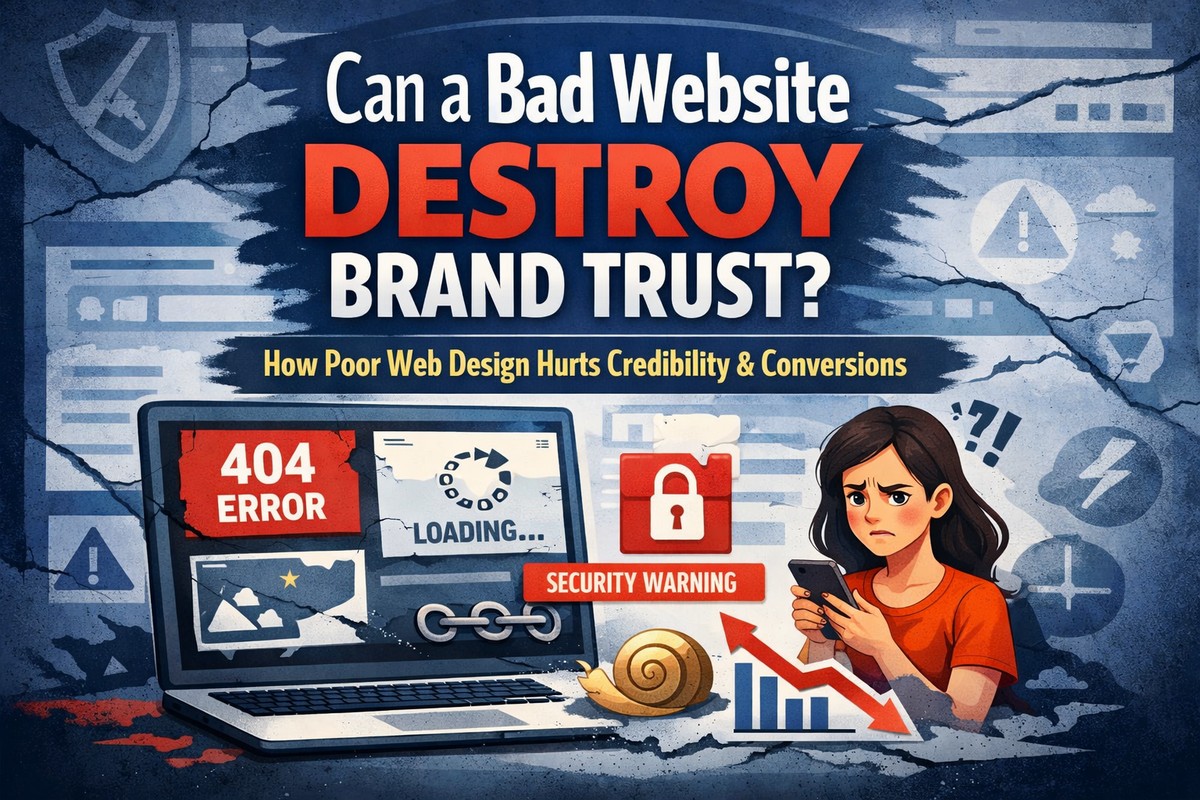
Introduction: Why Website Trust Matters More Than Ever
In today’s digital-first world, your website is often the first and most important impression your brand makes. Before customers call you, visit your store, or buy your product, they evaluate your credibility online.
So the question isn’t if a bad website affects trust—it’s how much trust you’re losing every day because of poor web design, slow performance, or outdated content.
The truth is clear: a bad website can seriously damage brand trust, reduce conversions, and drive customers straight to your competitors.
Your Website Is a Direct Reflection of Your Brand
Your website functions as your digital storefront. When visitors land on your site, they instantly assess:
- Professionalism
- Reliability
- Security
- Attention to detail
A poorly designed website subconsciously tells users your business may be unreliable, outdated, or careless—even if that’s not true.
How a Bad Website Destroys Brand Trust
1. Outdated Website Design Lowers Credibility
An outdated website design is one of the fastest ways to lose trust. Visitors often associate visual quality with business quality.
Common trust-killing design issues include:
- Old layouts or fonts
- Low-quality images
- Inconsistent branding
- Cluttered pages
If your website looks old, users may assume your business practices are too.
2. Slow Website Speed Signals Poor User Experience
Website speed is a major ranking factor and trust signal. Slow-loading pages frustrate users and suggest technical neglect.
A slow website:
- Increases bounce rates
- Lowers conversion rates
- Makes your business appear unreliable
Visitors expect fast, seamless experiences—and they won’t wait around.
3. Broken Links and Website Errors Undermine Trust
404 errors, broken links, missing images, and malfunctioning forms are immediate red flags. These issues signal poor website maintenance and make users question your professionalism.
If a website isn’t maintained, visitors may wonder:
- Is this business still active?
- Can I trust them with my information?
4. Poor Mobile Optimization Pushes Users Away
With the majority of users browsing on mobile devices, mobile-friendly website design is no longer optional.
A bad mobile experience—such as unreadable text or broken layouts—creates frustration and destroys trust. Google also penalizes websites that aren’t mobile-optimized, hurting SEO performance.
5. Confusing Navigation Creates Doubt
Clear navigation builds confidence. Confusing navigation destroys it.
If visitors can’t quickly find:
- Your services
- Pricing
- Contact information
They’re unlikely to trust your business. A well-structured website shows organization, clarity, and professionalism.
6. Missing Security Features Create Fear
Website security is one of the strongest trust signals. Missing SSL certificates, outdated plugins, or browser warnings instantly make users uneasy.
If visitors don’t feel safe, they won’t:
- Fill out forms
- Make purchases
- Contact your business
Security issues don’t just hurt trust—they stop conversions entirely.
The Hidden Cost of Losing Website Trust
A lack of trust leads to:
- Lower lead generation
- Fewer sales
- Higher bounce rates
- Lost revenue opportunities
Most visitors won’t tell you why they left—they’ll simply choose a competitor with a more professional website.
How to Improve Website Trust and Credibility
Rebuilding trust starts with intentional improvements:
- Invest in modern, professional website design
- Optimize website speed and performance
- Fix broken links and errors regularly
- Ensure mobile responsiveness
- Improve navigation and user experience
- Maintain strong website security
- Keep content fresh and updated
These improvements not only increase trust—they also boost SEO rankings and conversions.
Final Thoughts: Your Website Can Build or Break Trust
So, can a bad website destroy trust in a brand? Absolutely.
Your website is not just a marketing asset—it’s a trust-building tool. A poorly designed or neglected site sends the wrong message and silently drives customers away.
If your website feels outdated, slow, or confusing, it may be costing you more than you realize. Investing in a high-quality, user-focused website isn’t just good design—it’s smart business.