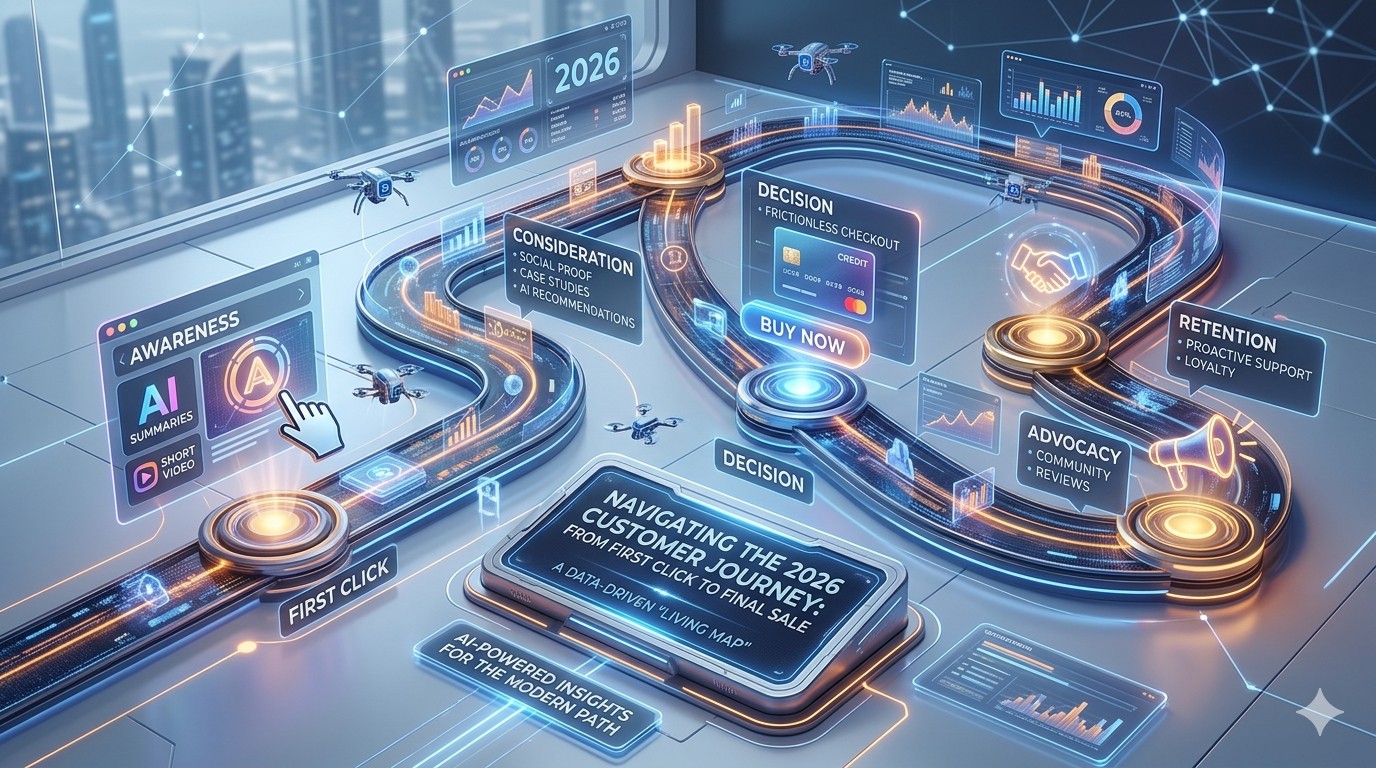
In the “good old days” (say, circa 2022), we liked to pretend the customer journey was a straight line. A user saw an ad, clicked it, and bought the thing. Simple, elegant, and as it turns out almost entirely mythical.
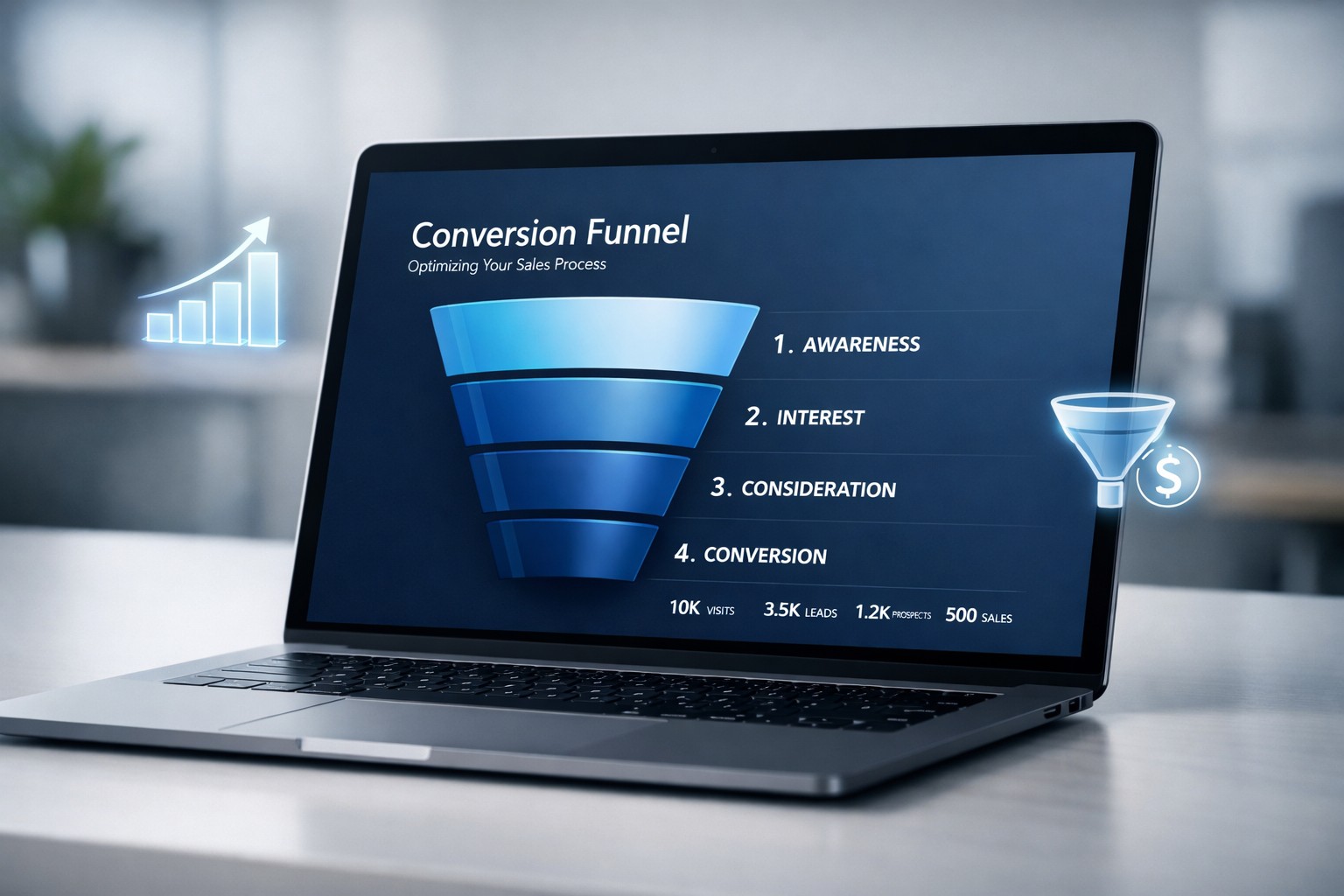
By 2026, the “funnel” has officially been retired to the museum of marketing history, right next to QR codes that don’t work. Today’s customer journey is less like a slide and more like a high-stakes game of Pinball. It’s messy, looping, and increasingly happens in “zero-click” environments where AI does the research for them.
If you want to turn a first click into a final sale today, you don’t just need a map; you need a GPS that updates in real-time.
The Anatomy of the 2026 Customer Journey
While the path is winding, the core phases remain our North Star. Here is how the modern journey breaks down:
| Stage | Customer State of Mind | Your Goal | The “Secret Sauce” |
| Awareness | “I have a problem but I don’t know the name of the solution yet.” | Be the most helpful answer in the room (or the LLM). | Zero-Click Content: Optimizing for AI-generated answers and short-form video. |
| Consideration | “I’m looking at three options. Why are you better?” | Build “collective confidence” across their entire buying group. | Social Proof: Relatable case studies from peers, not just generic logos. |
| Decision | “I’m ready to buy, but I’m terrified of making a mistake.” | Remove every ounce of friction. | Hyper-Personalization: Real-time offers based on their specific behavior. |
| Retention | “I bought it. Now, does it actually do what you said?” | Turn a “transaction” into a “relationship.” | Proactive Support: AI-driven check-ins before they even realize they’re stuck. |
| Advocacy | “I love this so much I’m telling my LinkedIn network.” | Incentivize the shout-out. | Community: Giving them a platform to be the hero of their own story. |
The 2026 Shift: From Static Maps to Living Data
The biggest mistake brands make is treating a Customer Journey Map like a piece of art something you design once, frame, and hang in the conference room. In 2026, static maps are where ROI goes to die.
1. The Rise of “Zero-Click” Discovery
Today’s buyers often find you through an AI summary or a 15-second video. They might never “click” until they are already 70% of the way through their decision.
The Insight: Your mapping must include “invisible” touchpoints. If you’re only tracking clicks, you’re missing the forest for the trees.
2. The Death of Last-Click Attribution
If a customer sees your ad on a smart-watch, researches you on a desktop, and finally buys via a voice command while driving who gets the credit? Hint: It’s not just the last one. Successful mappers in 2026 use multi-touch attribution to see the whole story.
How to Build Your “Living” Map (Step-by-Step)
- Define Your Personas (with AI): Don’t guess. Use your CRM data and AI tools to identify the actual patterns of your high-value customers.
- Audit the “Messy Middle”: Look at where people drop off. Is it a confusing pricing page? A slow-loading video? Use heatmaps and session recordings to see where the pinball falls off the table.
- Bridge the Silos: Your Marketing team, Sales team, and Customer Success team shouldn’t have three different versions of the customer. Use a Customer Journey Management (CJM) platform that pulls from a single source of truth (like Snowflake or BigQuery).
- Automate the Nudge: If someone stalls in the “Consideration” phase, your system should automatically trigger a personalized video or a targeted testimonial.
Avoid the “Wall of Sticky Notes” Pitfall
We’ve all been in those workshops. You spend eight hours putting post-it notes on a whiteboard, everyone feels productive, and then… nothing changes.
To make your mapping work, it must lead to measurable action. If your map identifies that “onboarding is confusing,” your next step isn’t to draw a prettier map it’s to rewrite the onboarding sequence.
Pro-Tip: If your journey map hasn’t been updated in the last 30 days, it’s no longer a map; it’s a history book.
The Bottom Line
Mapping the customer journey isn’t about controlling the customer’s path it’s about being the most reliable guide, no matter which detour they take. In a world of AI-driven search and fragmented attention, the brands that win are the ones that make the “messy” journey feel like a walk in the park.
Ready to start mapping? Just remember: the click is the beginning, not the end. Happy hunting!