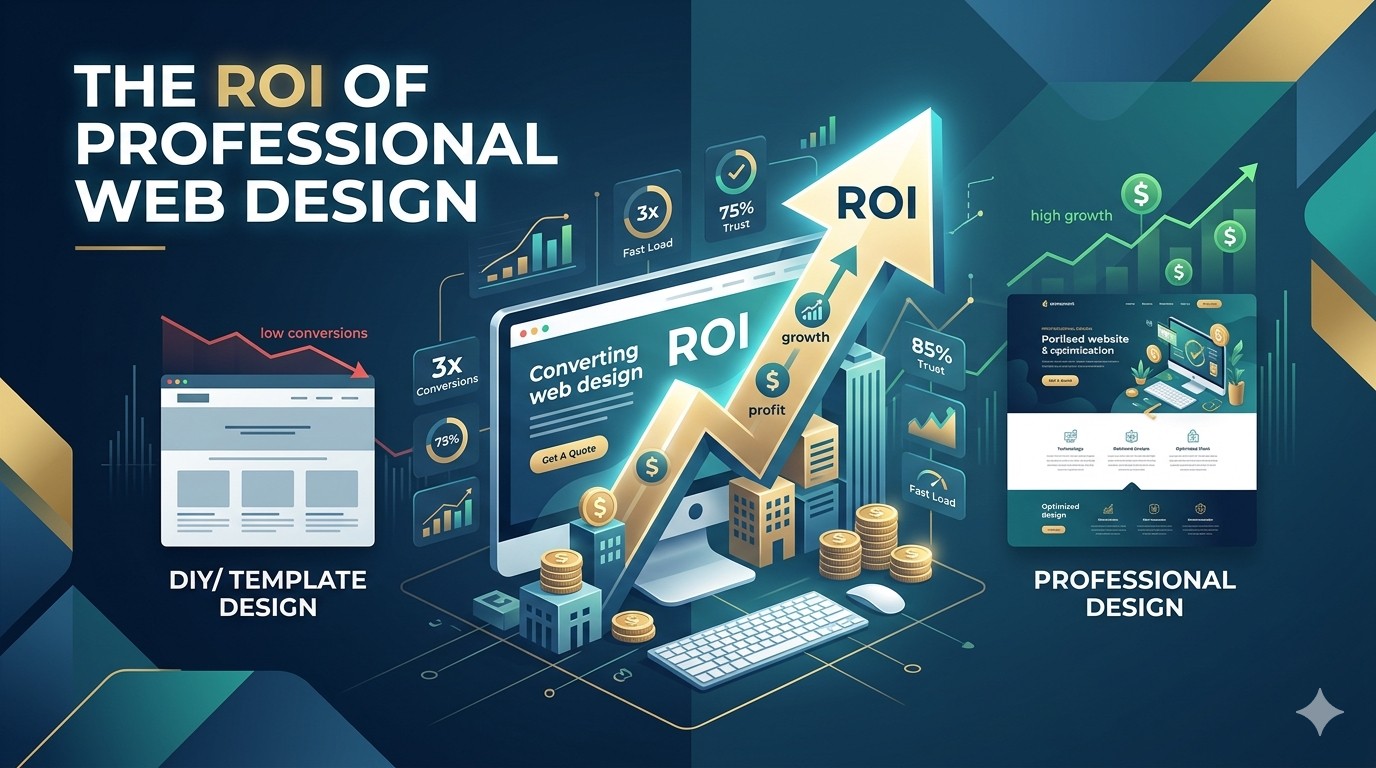
A professional website is often the first touchpoint between a brand and a potential customer. In 2026, where digital first impressions happen in milliseconds, the question for many businesses is no longer “Should we have a website?” but “Is our website actually making us money?”
The Return on Investment (ROI) of professional web design goes far beyond aesthetics; it is a measurable business asset that impacts lead generation, customer trust, and long term scalability.
1. The Conversion Multiplier
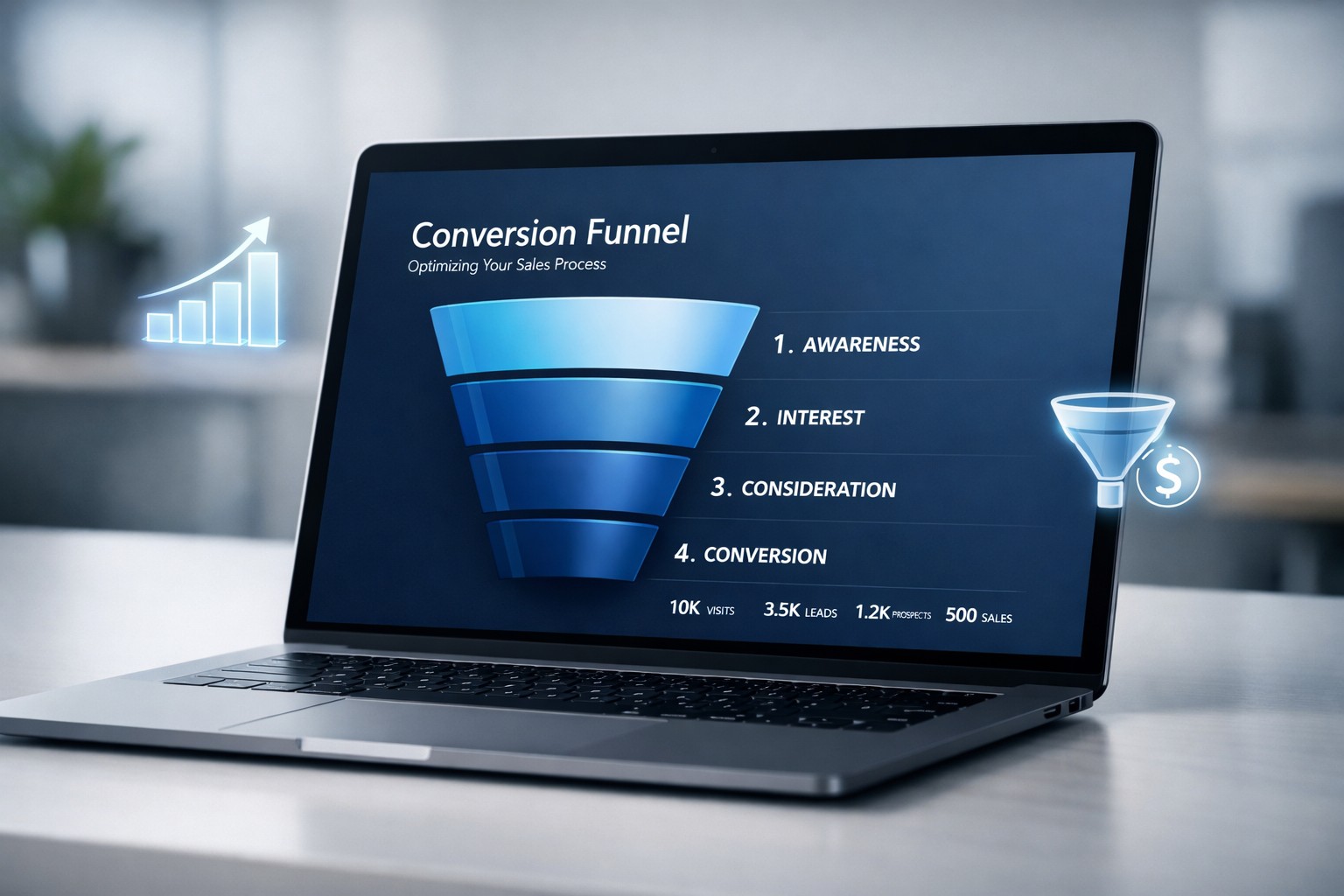
A professional website is built with a specific goal in mind: moving a visitor toward an action. Whether that is a purchase, a consultation booking, or a newsletter signup, design dictates behavior.
- Strategic UX: Professional designers use User Experience (UX) principles to remove friction. By optimizing the “path to purchase,” professional sites typically see conversion rates 2–3x higher than DIY or template-based alternatives.
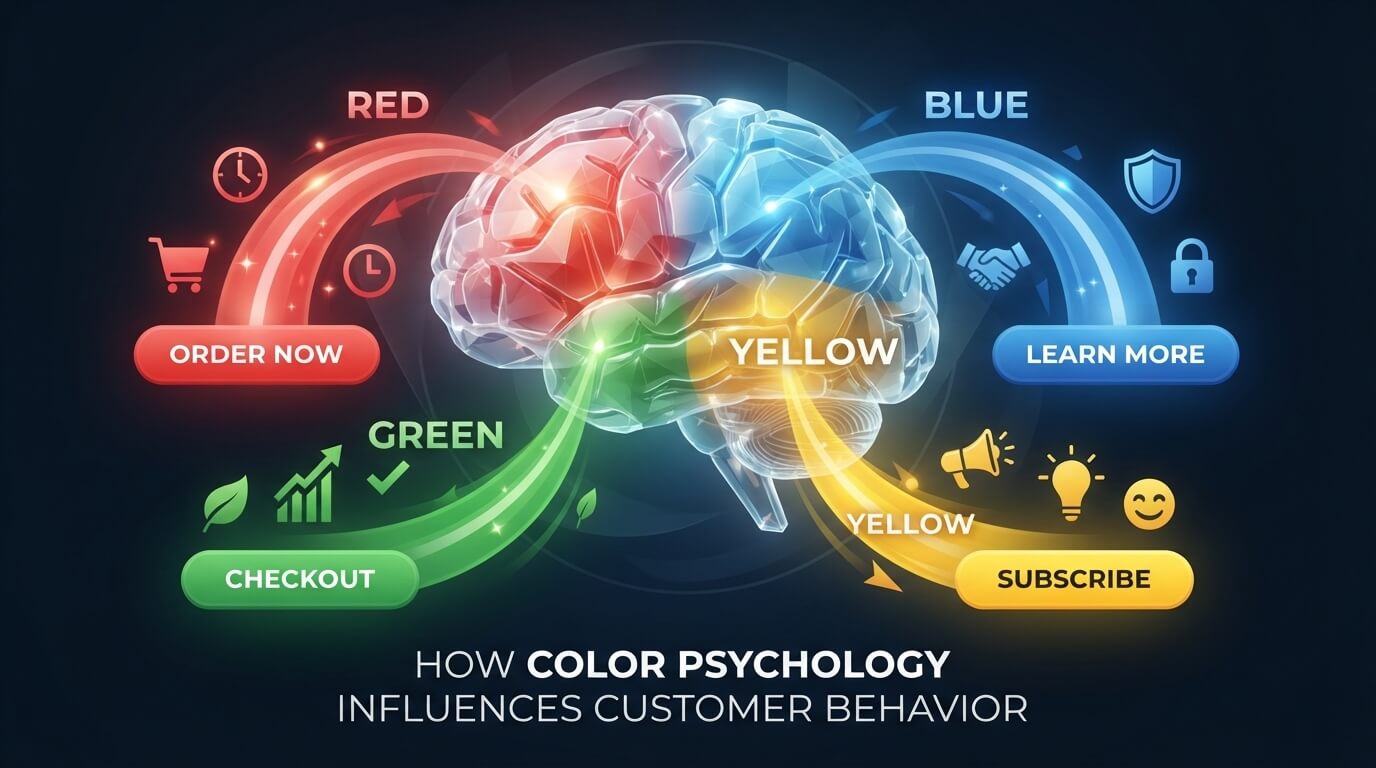
- Trust Signals: High-quality visuals, consistent branding, and clear calls-to-action (CTAs) reassure users. In fact, studies show that 75% of consumers judge a company’s credibility based on its website design alone.
The Math of Conversion ROI
Imagine two websites with the same amount of traffic:
| Metric | DIY / Outdated Site | Professional Website |
| Monthly Visitors | 1,000 | 1,000 |
| Conversion Rate | 1% | 4% |
| Total Monthly Leads | 10 | 40 |
| Average Lead Value | $500 | $500 |
| Monthly Revenue | $5,000 | $20,000 |
The difference isn’t just a prettier site it’s $15,000 in monthly revenue left on the table by not optimizing the design.
2. SEO as a Foundational Asset
In 2026, search engines like Google and AI driven search models prioritize technical performance. A professional build ensures your site isn’t just a digital brochure, but a high-ranking asset.
- Core Web Vitals: Professional developers optimize for speed and stability. A one-second delay in page load time can reduce conversions by up to 7%.
- Mobile-First Indexing: With over 60% of web traffic now originating from mobile devices, a responsive design is mandatory for ranking.
- Search Generative Experience (SGE): Professional sites use structured data and clean code hierarchies that make it easier for AI models to crawl, understand, and cite your business in AI search results.
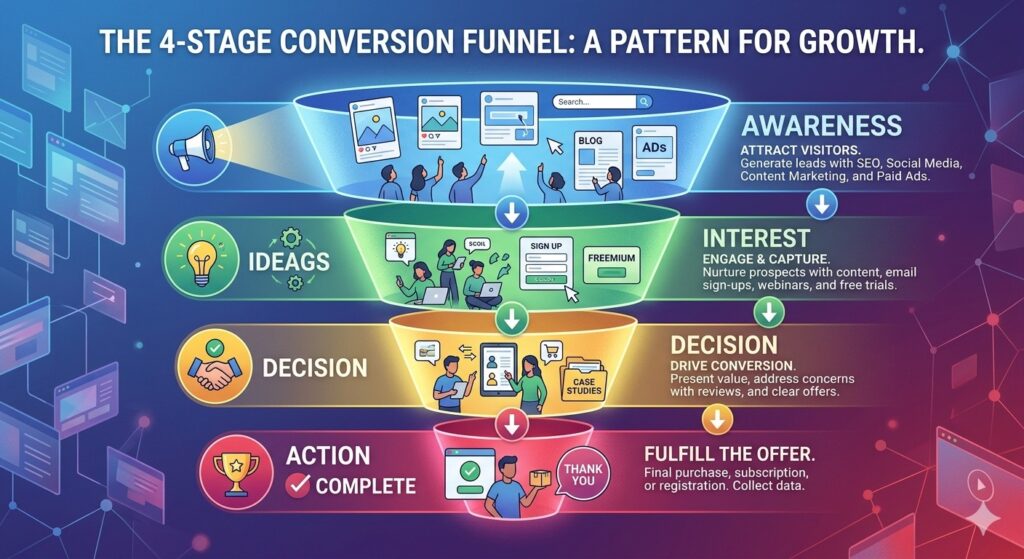
3. The “Invisible” ROI: Brand Equity & Scalability
While lead generation is the most direct metric, professional design offers long term financial benefits that are harder to track but equally vital:
- Reduced Customer Acquisition Cost (CAC): When your site converts organic traffic more effectively, you spend less on paid ads to achieve the same growth.
- Lower Support Costs: Intuitive navigation and well organized information allow customers to find answers themselves, reducing the burden on your customer service or sales teams.
- Future-Proofing: A professional site is built on a scalable architecture. Instead of needing a full rebuild every year as you grow, a custom designed site can be expanded and integrated with new tools (CRMs, payment gateways, etc.) seamlessly.
4. The Opportunity Cost of Delay
The true “cost” of a website is often not the invoice from the designer, but the revenue lost while waiting. This is known as the compounding delay effect. Every month spent with an underperforming DIY site is a month where:
- Competitors are capturing your market share.
- Your SEO “authority” is stagnant while others grow.
- Your brand perception is being potentially damaged by a poor user experience.
Conclusion
Investing in professional web design is an investment in your business’s sales force. Unlike a human employee, your website works 24/7, handles thousands of prospects at once, and is the face of your brand across the globe. When you look at the numbers, a high-performing site doesn’t just pay for itself it becomes the primary engine for your digital growth.
Are you ready to stop “having a website” and start owning a high-ROI business asset? Reach out to a professional design partner to audit your current performance today.